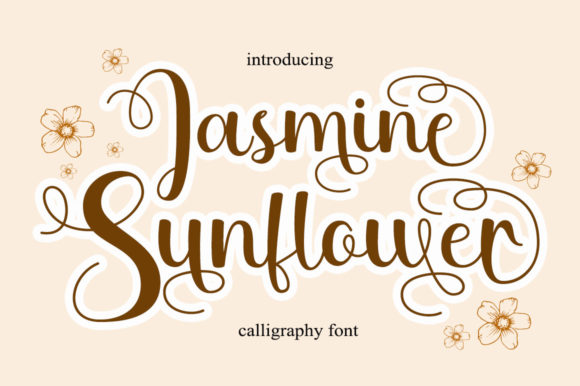
Jasmine Sunflower: A Graceful Script Font for Creative Branding
I recently found myself staring at a blank brand board, ready to dive into a new project for a local artisanal skincare line. The goal was to craft something that felt organic, handcrafted, and elegant — the kind of visual identity that whispers "natural" and shouts "luxury." That’s when I opened up my font library and landed on Jasmine Sunflower, a thin lettered and graceful script font. It immediately caught my eye with its delicate curves and soft rhythm. As a designer who's tested countless script handwritten fonts, I knew this one had potential.
Jasmine Sunflower in Logo Design and Brand Identity
Jasmine Sunflower is a dream for logo design. Its graceful script brings a sense of refinement and charm without feeling overly ornate. I used it as the primary typeface for the brand name in the logo concept, pairing it with a clean sans serif for supporting text. The contrast worked beautifully; the script added warmth and personality, while the sans kept things modern and legible. This balance is crucial in brand identity, especially for businesses like the skincare line I was working on — where trust and authenticity matter.
One thing I noticed right away was how well Jasmine Sunflower handles both uppercase and lowercase characters. The flow between letters feels natural, which is rare for many script handwritten fonts. I also appreciated the PUA encoding, which gave me access to all the alternates and ligatures seamlessly. That made tweaking the logo feel more intuitive, allowing me to fine-tune the look without overthinking character substitutions.
Jasmine Sunflower for Packaging Mockups and Product Labels
Moving from the logo to packaging, I placed Jasmine Sunflower on a mockup for a small glass jar of facial serum. The thin lines of the font paired perfectly with the minimalist aesthetic of the product. It didn’t overwhelm the design but instead elevated the overall feel. For product labels, I recommend using it sparingly — maybe just on the brand name or a tagline — to maintain clarity while still benefiting from its ravishing style.
The font’s elegance shines through on high-end packaging designs, especially those aimed at niche audiences like eco-conscious consumers or luxury beauty buyers. When combined with botanical illustrations or muted color palettes, Jasmine Sunflower adds a touch of sophistication that aligns well with the brand’s ethos. However, avoid using it for long ingredient lists or body copy — readability drops off quickly in smaller sizes.
Testing Jasmine Sunflower on Business Cards
Next stop was the business card. I wanted the contact info to remain simple and scannable, so I reserved Jasmine Sunflower for the company name and a short tagline. The result was subtle yet memorable. Clients often overlook the importance of typography on business cards, but choosing the right font can leave a lasting impression. Jasmine Sunflower helped this project stand out visually without being too quirky or hard to read.
When testing Jasmine Sunflower at different sizes, I found it works best at 14pt or larger on printed materials. Below that, the thin strokes become harder to distinguish, especially if you're printing on lower-quality stock. So, keep it for headlines and accents rather than body text.
Jasmine Sunflower in Social Media Layouts and Web Design
Social media graphics are another area where Jasmine Sunflower really comes alive. I used it in a series of Instagram posts promoting seasonal offerings for the same skincare brand. The font’s delicate nature gave the visuals an air of exclusivity and care, perfect for lifestyle content. Just be sure to use a solid background or enough stroke weight when applying it to digital platforms, as some versions might appear too light against certain images.
On the website header, Jasmine Sunflower performed admirably. It wasn’t too heavy, and it maintained a softness that matched the brand’s voice. For web design, I’d suggest using it in large hero sections or call-to-action buttons, not in navigation menus or body text. It’s a display font at heart — ideal for making a statement rather than conveying information in bulk.
Jasmine Sunflower as a Supporting Typeface in Editorial Design
I also experimented with Jasmine Sunflower in editorial layouts, such as a magazine-style blog post for a handmade soap seller. Used in pull quotes and subheadings, it added a personal touch that felt authentic and inviting. The font doesn’t scream for attention, but it does earn it by fitting naturally into the design without disrupting the flow of reading.
What I love about this handwritten font is that it maintains consistency across different weights and styles (if available), which is essential when building out a full brand system. You want your typeface to feel cohesive in every application, from print to screen. Jasmine Sunflower passed that test with flying colors in the case of short-form branding elements like testimonials and featured titles.
Font Pairing Ideas with Jasmine Sunflower
If you're considering Jasmine Sunflower for your next project, here are a few practical font pairing suggestions based on real-world usage:
- With a Serif Font: Try pairing it with a refined serif like Playfair Display or Lora. These combinations work well for wedding invitations, boutique branding, and editorial layouts.
- With a Sans Serif Font: Contrast is key. Use a geometric sans like Montserrat or Raleway to ground the script handwritten elegance of Jasmine Sunflower.
- With Another Script Font: Only if you're aiming for a layered or decorative headline. But stick to one dominant script for most brand identities to avoid visual clutter.
Remember, the goal is to create harmony, not chaos. Jasmine Sunflower is versatile enough to adapt to various pairings but should always be treated as the star of the show in Fonts that prioritize style and sentiment.
Limitations and Best Practices for Using Jasmine Sunflower
While Jasmine Sunflower is a premium font with a strong emotional appeal, it’s not without limitations. Because it’s a thin lettered script, it doesn't perform well in low-resolution environments or at very small sizes. I’ve seen similar script handwritten fonts struggle with pixelation on digital screens unless they’re optimized specifically for web use.
Also, consider the context. Jasmine Sunflower may not be the best fit for formal corporate branding, technical documentation, or anything requiring dense blocks of text. Stick to it for logos, headings, social captions, and short phrases where its charm can shine.
To test Jasmine Sunflower effectively before finalizing a client project, I recommend doing a quick mock-up pass using real content and placing it in actual design scenarios. Try it on a shop sign, a label, or even a sample Instagram post. See how it behaves in motion and at scale. If it holds up under scrutiny, it’s likely a good match for your project.
Licensing Considerations for Commercial Projects
Before diving headfirst into a client project, make sure to check the commercial font licensing agreement for Jasmine Sunflower. Like many Fonts, it may require a specific license for use in brand identity, packaging design, or print-on-demand products. Always confirm whether the license supports webfonts, merchandise, or digital assets if those are part of the deliverables. Licensing clarity ensures you don’t run into issues later when scaling your creative output.
Final Thoughts on Real-World Application
Working with Jasmine Sunflower reminded me why I fell in love with script handwritten fonts in the first place. They bring life and soul to design systems, especially when paired with thoughtful imagery and layout choices. In the hands of a skilled designer, Jasmine Sunflower becomes more than just a font — it becomes part of the brand story.
Whether you're designing for a cozy café, a boutique stationery line, or a high-end fashion label, this Font has the flexibility and flair to enhance your work. It’s not just pretty — it’s functional in the right contexts. And that, in my experience, is what makes a great typeface worth investing in.